
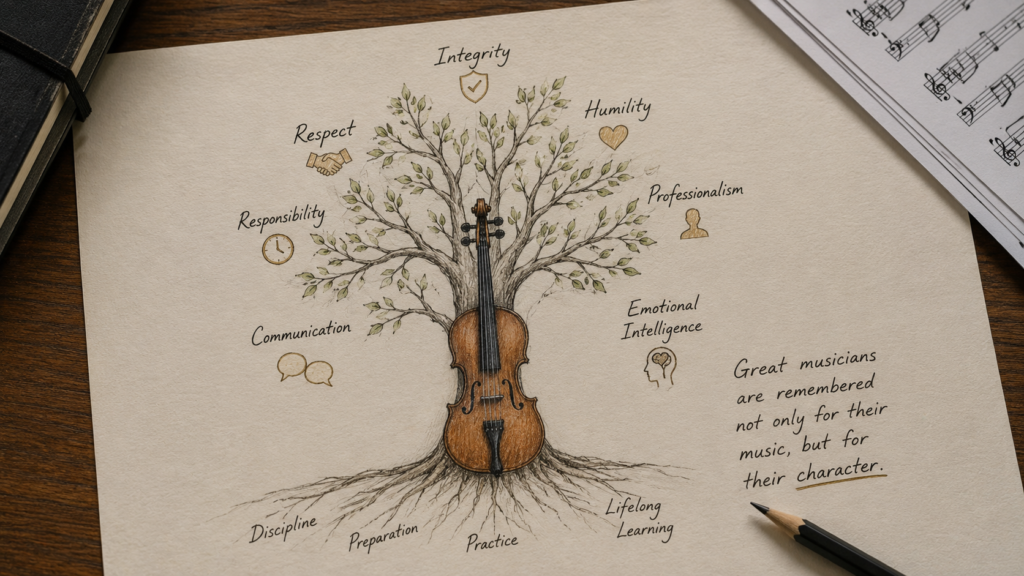
Professional Ethics and Etiquette in MusicA Guide for Advanced Students and Future Music ProfessionalsIntroductionSuccess in music is often associated with technical mastery, artistic expression, and years of disciplined practice. While these qualities are essential, they represent only one dimension of professional excellence. Throughout the history of classical and contemporary music, the artists who have built enduring careers are those whose musicianship has been matched by integrity, humility, professionalism, and respect for others.Professional ethics shape every aspect of a musician's life—from private lessons and rehearsals to competitions, performances, auditions, teaching, and collaboration. A musician's reputation is built gradually through daily decisions, communication, reliability, and personal conduct. Technical ability may earn opportunities, but professional character determines whether those opportunities continue throughout a lifetime.This article explores the ethical principles that define successful musicians and explains how professionalism strengthens artistic growth, collaboration, and long-term career development.Key HighlightsProfessional reputation is built through character as much as technical ability.Healthy competition encourages artistic growth, while mutual respect strengthens the musical community.Integrity, humility, reliability, and emotional intelligence are essential qualities of every successful musician.Main BodyCharacter Before TalentTechnical excellence attracts attention, but personal character earns lasting trust. Teachers, conductors, collaborators, and institutions consistently choose musicians who demonstrate honesty, responsibility, humility, and professionalism. Artistic achievement and ethical behaviour should develop together throughout a musician's education.Professional RelationshipsRespect for teachers, peers, accompanists, conductors, technicians, and administrators creates an environment where artistic excellence can flourish. Professional musicians listen carefully, communicate respectfully, arrive prepared, and recognize that every collaboration depends upon mutual trust.Ethical CompetitionCompetitions and auditions are opportunities for artistic growth rather than personal conflict. Mature musicians celebrate the success of others, learn from exceptional performances, and focus on continuous self-improvement instead of unhealthy comparison.Receiving FeedbackConstructive criticism is an essential component of artistic development. Professional musicians welcome thoughtful feedback, ask questions, and apply suggestions with maturity. Defensiveness limits growth, while openness accelerates learning.Reliability and DisciplineProfessionalism is demonstrated through consistent habits. Arriving early for rehearsals, meeting deadlines, responding to communication promptly, practicing responsibly, and fulfilling commitments establish credibility within the musical community.Digital ProfessionalismSocial media and online communication are extensions of a musician's professional identity. Respectful communication, responsible content, appropriate crediting of collaborators, and ethical online behaviour contribute to long-term professional reputation.Emotional IntelligenceMusicians regularly perform under pressure while collaborating with individuals from diverse backgrounds. Emotional intelligence—including empathy, patience, self-awareness, and effective communication—allows artists to build productive relationships and maintain positive working environments.Lifelong LearningProfessional musicians remain lifelong students. Every rehearsal, lesson, performance, score study, and collaboration provides opportunities for artistic and personal development. Curiosity and humility sustain continuous growth throughout an entire career.ConclusionProfessional ethics are not separate from artistic excellence—they are an essential part of it. While technical skill opens doors, integrity, humility, professionalism, and respect determine whether those doors remain open. The musicians who leave the greatest legacy are remembered not only for their performances, but also for the trust they inspired, the communities they strengthened, and the respect they showed to everyone around them. Developing strong ethical values alongside musical ability prepares students not only to become exceptional performers, but also respected members of the global musical profession.